The service management landscape has reached a critical inflection point. As we move toward 2026, the traditional "reactive" model is being dismantled by the weight of rising operational complexity, intensified cost pressures, and a volatile geopolitical environment. Organizations can no longer rely on legacy systems that struggle to meet modern regulatory demands or the speed required by a digital-first workforce. The transition from AI experimentation to full-scale execution is no longer an option—it is the foundation for resilient, future-ready operations.
The 5 Drivers Shaping 2026
1. From Reactive to Proactive
Manual support is an expensive bottleneck. Gartner’s 2026 Agenda highlights operational cost reduction as a top priority for CIOs.
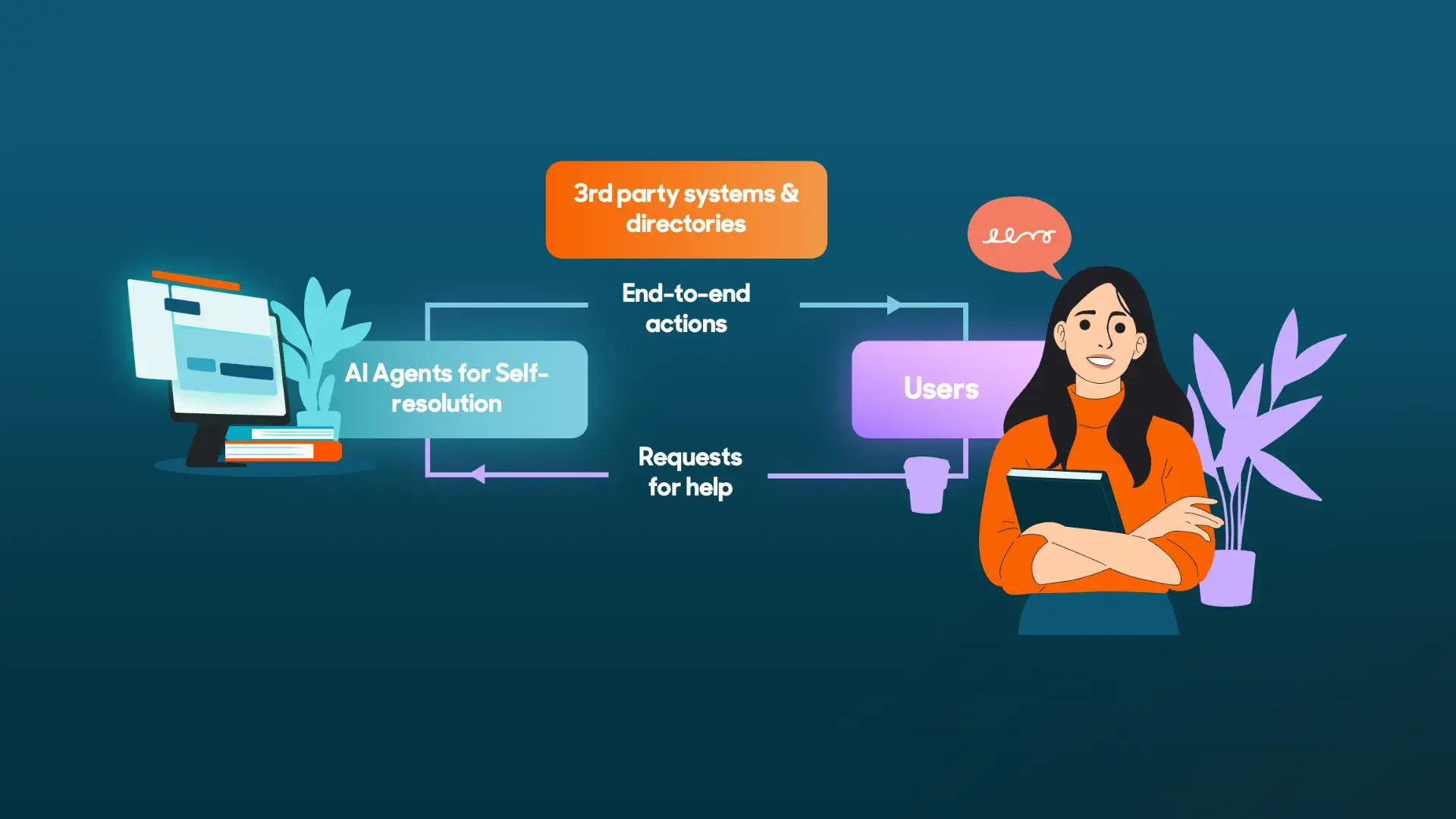
- The Evolution: We are moving beyond bots that simply suggest answers. In 2026, AI is an autonomous agent that executes tasks. It identifies issues before they escalate, shifting IT from a "firefighter" to a proactive business driver.
2. Automation Beyond IT
Generative AI has lowered the barrier to automation. Workflows that once took months to code can now be designed in days—and not just by IT.
- It’s all about business value: HR and Finance now orchestrate their own end-to-end "outcomes." Whether it’s onboarding a new hire or triggering access approvals, the process is seamless and low-touch. IT provides the governance; the business provides the speed.
3. Intelligent Control of the Software Estate
As SaaS and cloud usage explode outside central IT, "Shadow IT" has become a massive financial leak.
- From system of record to system of action: Periodic license tracking is not enough anymore. Leading organizations are adopting continuous control with clear actionable intelligence. By gaining 100% visibility into usage and spend, IT and Finance can optimize the software footprint in real-time, ensuring every Euro spent delivers value.
4. From Technical SLAs to Great Employee Experience (EX)
In 2026, the quality of a workplace's digital tools is a primary factor in talent retention. Digital-native employees have zero tolerance for clunky, "enterprise-grade" complexity. They expect the same seamless experience at work that they get from consumer apps. This shift is also reflected in the new ITIL 5, where experience is elevated as a core lens for service management—not a side topic.
- Experience first: It’s no longer enough for a system to be "up"; it must guide the user and be easy & intuitive . By reducing "digital friction," IT moves from being a barrier to being a productivity multiplier. When the software gets out of the way, employees can focus on high-value work.
5. Geopatriation: The Sovereignty Mandate
Geopolitical uncertainty is forcing a rethink of the "Global Cloud" strategy. Organizations are prioritizing data sovereignty and control over their workloads.
- Cloud your way: Gartner predicts that by 2030, 75% of European enterprises will "geopatriate," moving virtual workloads to regional or sovereign alternatives. Control over where data and AI run is now a cornerstone of risk management.
At Matrix42, we’re bringing these drivers into one cohesive approach. It’s about more than just managing services—it’s about building a resilient, productive, and compliant operation that’s ready for 2026 and beyond.